How Paper and Substrates Shape Your Brand Experience
Before anyone reads your message, they feel the material. Paper weight, texture, coating, and substrate choice all shape how your print is perceived.

Material choice affects how a printed piece looks, feels, lasts, and is remembered.
Paper is often treated like the last detail in a print project, but it can change the way a piece looks, feels, performs, and lasts.
The right material can make a printed piece feel more polished, more durable, and more intentional before anyone reads a word.
This guide explains why paper still matters, when it is the right choice, and when it is worth thinking beyond paper altogether.
Paper and substrate choice affect color, durability, texture, weight, finish, readability, and the way people experience a printed piece.
Paper is still where most print projects begin
For brochures, postcards, flyers, booklets, invitations, stationery, direct mail, and sales materials, paper is usually the first material decision.
But not all paper behaves the same way. Weight, brightness, opacity, texture, coating, and finish all influence how the final piece looks and feels.
A heavier cover stock may feel premium. A softer uncoated sheet may feel personal. A glossy coated stock can make images feel sharper and more saturated.
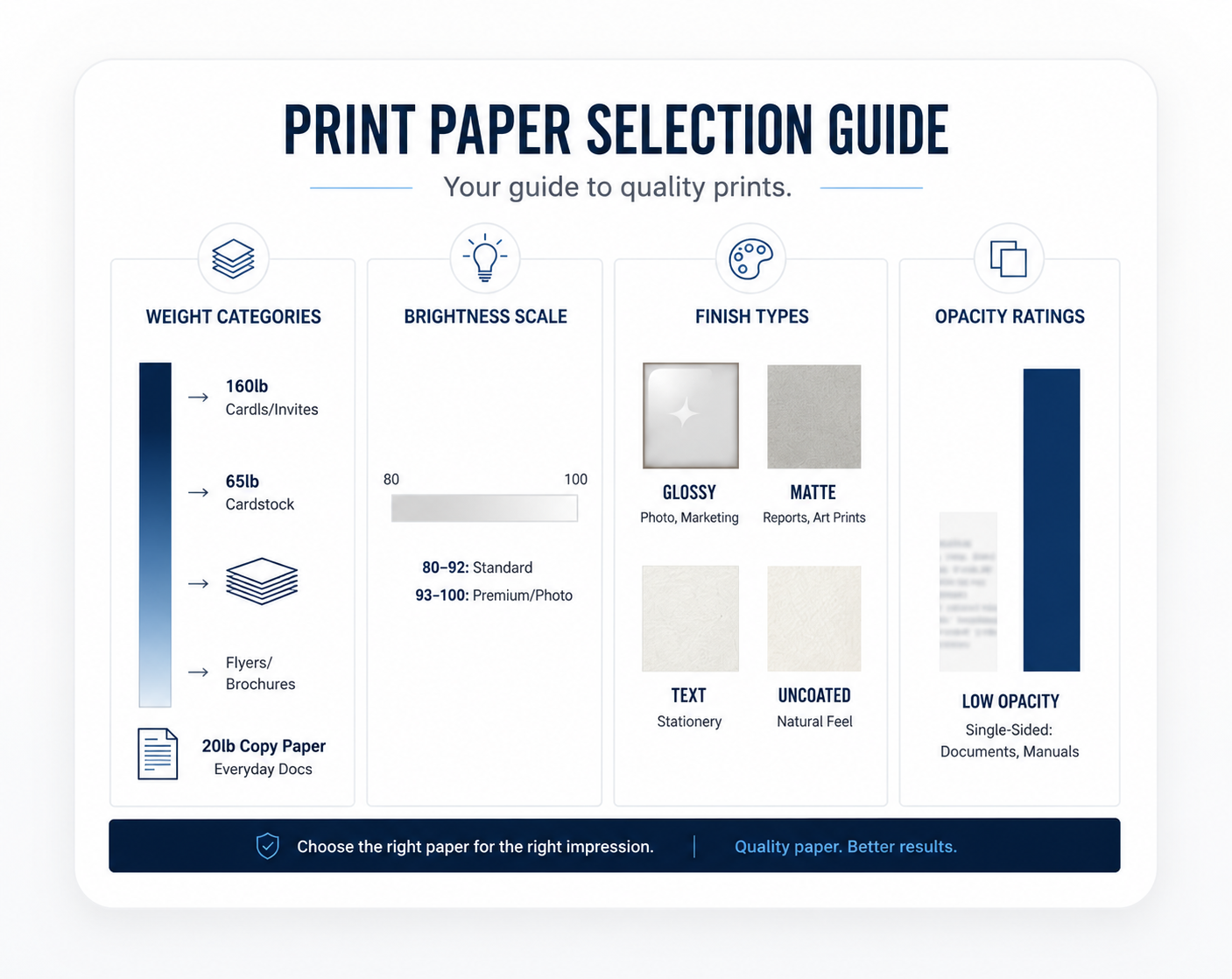
Paper choices do not have to feel complicated
Most decisions come down to a few practical questions: how the piece will be used, how long it needs to last, how it should feel, and what finish supports the design.
Text vs. Cover
Text stock is lighter and often used for inside pages. Cover stock is heavier and commonly used for postcards, covers, folders, and cards.
Coated vs. Uncoated
Coated stocks can make colors and photos look sharper. Uncoated stocks feel more natural, tactile, and writable.
Weight vs. Thickness
Paper weight affects feel and durability, but thickness can vary by stock. Two papers with similar weights may still feel different.
Texture
Smooth, linen, felt, laid, and specialty textures can change the mood of a piece before the design is even read.
Finish
Gloss, satin, matte, soft-touch, UV coating, and other specialty finishes affect shine, protection, contrast, and the way people handle the piece.
Use Case
A direct mail piece, lobby sign, sales folder, booklet, event display, and leave-behind all ask different things from the material.
The most common paper mistake is choosing it too late
Paper should not be the final checkbox after the design is done. Material choice can affect color, folds, mailing rules, durability, finishing, and budget.
A sample may feel great in your hand, but the best choice depends on the full job: quantity, design coverage, ink, finish, mailing, use environment, and how the piece needs to perform.
- Brochures, postcards, newsletters, sell sheets, and flyers
- Booklets, reports, catalogs, programs, and manuals
- Business cards, invitations, folders, and leave-behinds
- Direct mail pieces that need to feel credible and easy to handle
- Print projects where texture, fold, and finish matter
When paper is the right choice
Paper is still one of the most flexible, familiar, and cost-effective ways to communicate. It is easy to fold, bind, mail, write on, hand out, and finish.
The key is choosing a paper that supports the job instead of fighting it. A polished mailer, a durable menu, a soft-touch invitation, and a quick flyer should not all use the same stock.
Sometimes the job calls for another substrate
A substrate is simply the material being printed on. Paper is one substrate, but print can also live on vinyl, foam board, acrylic, corrugated plastic, adhesive materials, synthetic stocks, wood, and more.
These materials are often better when a piece needs to be displayed, mounted, installed, handled repeatedly, used outdoors, or built into a branded environment.
Thinking beyond paper can turn a print project into signage, packaging, displays, wall graphics, wayfinding, event materials, or tactile brand pieces.
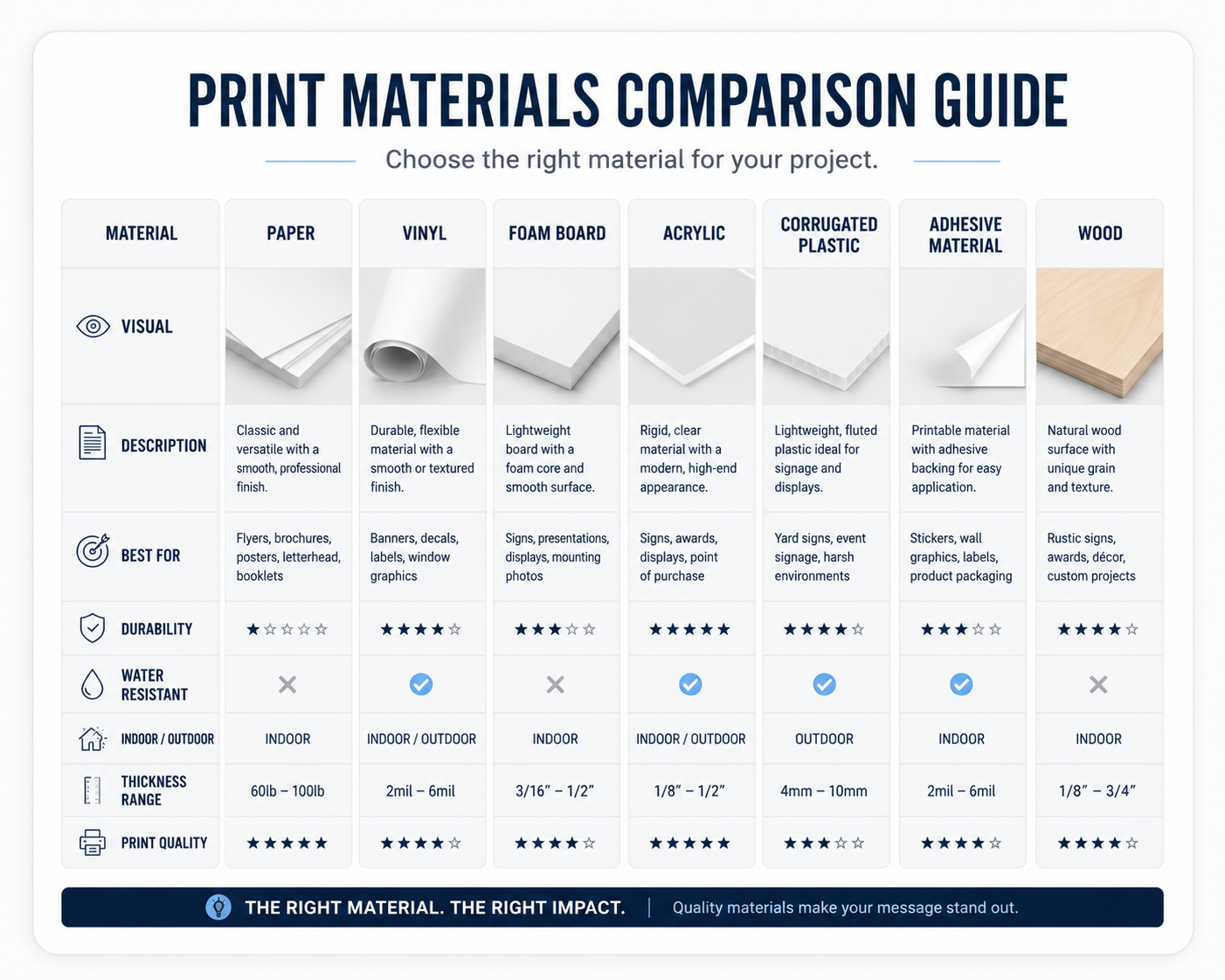
Choose based on what the piece needs to do
The right material is not just the one that looks good. It is the one that supports the job from production through final use.
How will it be handled?
Pieces that get mailed, folded, carried, posted, installed, or reused need materials that can survive that path.
Where will it live?
Indoor, outdoor, retail, event, office, and mailing environments all create different demands for durability and finish.
What should it feel like?
Premium, practical, bold, natural, durable, elegant, or temporary all point toward different materials and finishes.
Will it be finished?
Folding, binding, laminating, mounting, cutting, coating, and mailing can influence which material will work best.
How fast does it need to move?
Availability, drying time, finishing steps, installation needs, and shipping can affect timing.
What budget does it need to fit?
The best choice balances look, feel, durability, production efficiency, and cost.
Creative ways to use different substrates
Different materials can help printed pieces do more than carry information. They can guide people through a space, make a brand feel more dimensional, or create a stronger handoff between marketing and environment.
- Use rigid boards for event signs, presentation boards, displays, and lobby pieces.
- Use vinyl for decals, window graphics, wall graphics, labels, and temporary promotions.
- Use synthetic stocks for menus, cards, tags, or materials that need more durability.
- Use textured papers for invitations, premium collateral, announcements, and tactile brand moments.
- Use mounted prints, acrylic, wood, or specialty materials for interior displays, statement pieces, and branded environments.
We help match the material to the job
You do not need to know every paper weight, coating, substrate, or finish before starting a project. Voom helps you narrow the choices around the real use case.
We ask how it will be used
Mailing, handing out, posting, installing, binding, folding, and shipping all shape the recommendation.
We consider production and finishing
Ink coverage, coating, folding, cutting, mounting, binding, and durability all matter before a material is chosen.
We help balance feel and budget
The goal is a material that supports the message without overbuilding or undercutting the final piece.
We flag potential issues early
Some materials affect folds, color, drying, mailing, installation, or finishing. We help catch those details before production.
We source practical options
When a project needs something special, we can help identify paper, synthetic, rigid, adhesive, or display materials that fit.
We keep the process grounded
Material choice should make the project stronger, clearer, and easier to produce, not more confusing.
The takeaway: material choice is part of the message
Paper and substrates are not just production details. They help determine whether a piece feels premium, practical, durable, temporary, bold, quiet, formal, or approachable.
If you are not sure what stock or substrate fits your next project, talk to Voom early. A little planning before production can make the final piece feel much more intentional.
Paper and substrate questions, answered
A few quick answers to the paper and material questions that come up most often.
What is the difference between paper and substrate?
Paper is one type of substrate. A substrate is any material being printed on, including paper, vinyl, rigid board, acrylic, synthetic stock, adhesive material, and more.
What paper should I use for a brochure?
Brochures often use text-weight coated or uncoated paper, depending on the desired feel, fold, image quality, and budget. Heavier cover stock may be used for premium pieces.
What is the difference between coated and uncoated paper?
Coated paper has a surface treatment that can make images and color look sharper. Uncoated paper feels more natural and is often easier to write on.
Does thicker paper always mean better quality?
No. Thicker paper can feel more substantial, but the best choice depends on how the piece will be used, folded, mailed, finished, and handled.
When should I use vinyl instead of paper?
Vinyl is often better for decals, windows, walls, labels, temporary signage, and pieces that need flexibility, durability, or adhesive backing.
What are rigid substrates used for?
Rigid substrates are often used for signs, displays, event boards, presentation pieces, mounted graphics, wayfinding, and branded interiors.
Can Voom help me choose the right paper?
Yes. Voom can help compare stocks, coatings, finishes, substrates, and production options based on your design, use case, quantity, timing, and budget.
Should I choose the material before designing?
It helps to consider material early. Paper, coating, finish, folds, mounting, mailing, and installation can all affect design decisions.
Bring us the idea. We’ll help match the material.
Tell us how the piece will be used, where it needs to go, and what it should feel like. Voom can help you choose a paper, substrate, finish, and production path that makes sense.