Print Binding: How Pages Come Together Shapes the Experience
Binding determines how a printed piece opens, feels, lasts, stores, mails, and gets used. It is more than a finishing detail.
The right binding choice can make print easier to read, easier to keep, and easier to trust.
Binding is easy to overlook until a piece does not open well, pages fall out, or the finished project feels less polished than expected.
Binding is not just how pages are held together. It shapes how the piece is handled, referenced, mailed, stored, and perceived.
Print binding is the process of securing multiple printed pages into one finished piece. The right binding method depends on page count, durability, budget, appearance, and whether the piece needs to lay flat.
What is print binding?
Print binding is the process of turning loose printed sheets into a single finished piece. It is what makes booklets, manuals, catalogs, programs, reports, training materials, and presentation books feel complete.
Binding affects durability, usability, page count, cost, how the piece opens, and how professional it feels. In other words, binding is both functional and strategic.
Binding turns pages into a finished experience
A strong print piece is not only designed and printed well. It also needs to be assembled in a way that supports how people will actually use it.
Why binding choice matters
The wrong binding can make a great design frustrating to use. A booklet that will not lay flat, a manual that wears out too quickly, or a catalog with the wrong spine can change how people experience the whole project.
The right binding makes content easier to read, improves longevity, supports the purpose of the piece, aligns with budget and volume, and can raise the perceived value of the finished print.
Binding should not be an afterthought. Choose it based on how the piece will be opened, handled, stored, referenced, mailed, or handed out.
Common binding types and when to use each
These are the binding methods clients ask about most often. Each one has a different balance of cost, durability, page count, appearance, and usability.
Saddle stitch
Pages are folded and stapled along the spine. Saddle stitch is fast, lightweight, and cost-effective for lower page counts.
- Booklets
- Programs
- Newsletters
- Short-run publications
Perfect binding
Pages are glued along the spine with a wraparound cover. It gives thicker pieces a clean, professional look and a printable spine.
- Catalogs
- Manuals
- Reports
- Higher page-count publications
Plastic coil binding
Pages are punched and bound with a continuous plastic coil. It is durable, practical, and lays completely flat.
- Workbooks
- Training manuals
- Reference guides
- High-use materials
Wire binding
Double-loop metal wire holds pages together. It lays flat like coil but has a more polished presentation look.
- Presentations
- Calendars
- Professional manuals
- Premium reference pieces
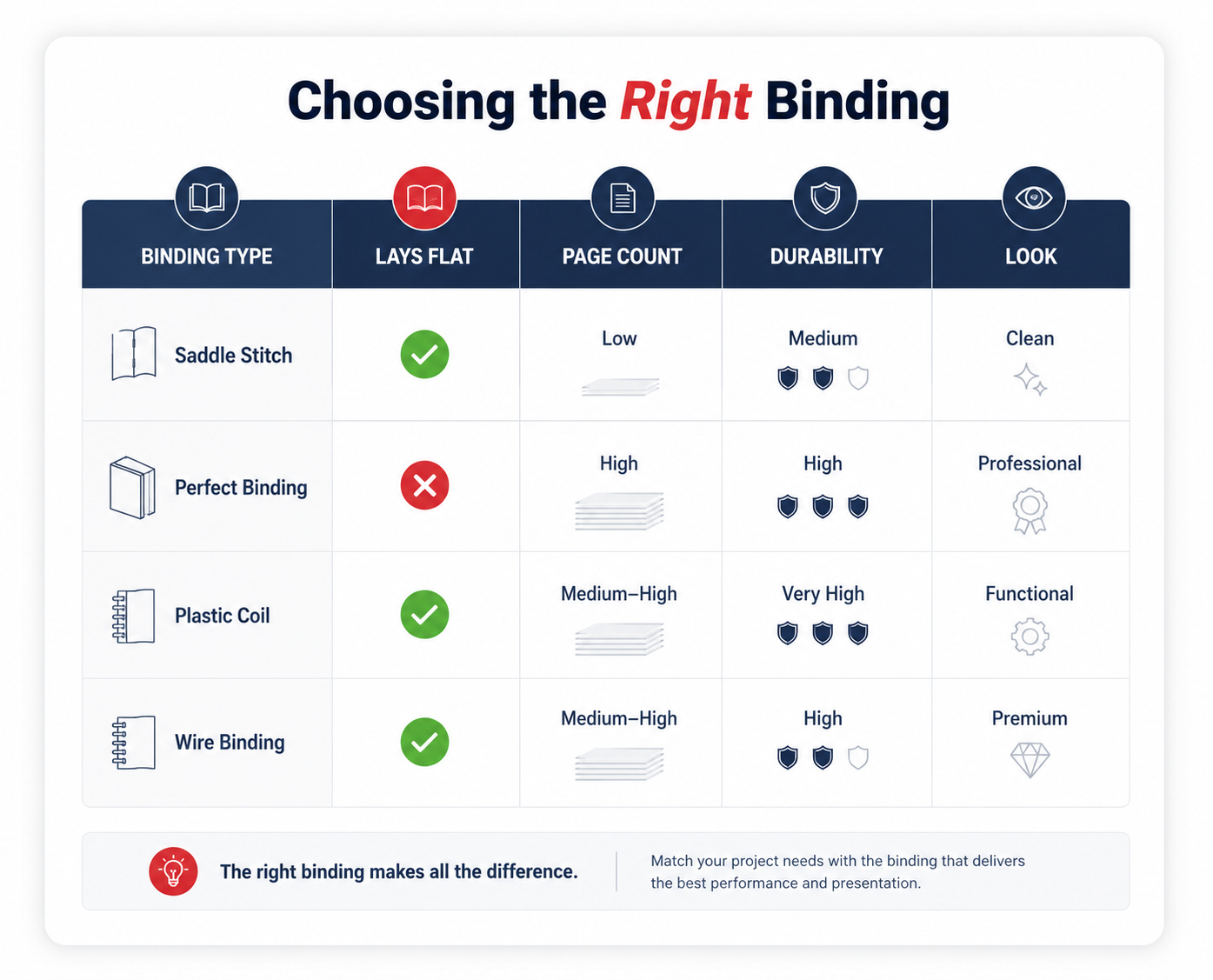
| Binding type | Lays flat? | Page count | Durability | Look |
|---|---|---|---|---|
| Saddle stitch | Mostly | Low | Medium | Clean and simple |
| Perfect binding | No | High | High | Professional |
| Plastic coil | Yes | Medium to high | Very high | Functional |
| Wire binding | Yes | Medium to high | High | Premium |
Voom can help match the binding method to the page count, use case, finish, and budget.
How binding affects cost and production
Binding decisions can affect turnaround time, production complexity, mailing eligibility, shipping weight, and overall budget. The choice can also affect how much design setup is needed before printing begins.
- Saddle stitch is efficient. It is often fast and affordable for smaller booklets, programs, and lightweight publications.
- Perfect binding changes perception. It usually costs more, but it can make a catalog, manual, or report feel more substantial.
- Coil and wire add usability. They are strong choices when people need to reference the piece repeatedly or keep it open while working.
- Choosing early prevents rework. Binding affects margins, page count, spine setup, finishing, packaging, and sometimes mailing plans.
Binding does not just hold pages together. It determines how print is experienced.
Where binding choices matter most
Binding plays an especially important role when someone will flip through a piece, reference it repeatedly, write in it, keep it on a shelf, or share it in a professional setting.
Training manuals
Durability and lay-flat usability matter because people may use the piece repeatedly while learning or working.
Catalogs and reports
Appearance, spine quality, and page count matter because the piece represents the brand and may be saved.
Programs and booklets
Speed, cost, and clean presentation matter when the piece is event-based or produced in larger quantities.
Reference guides
Usability matters most when readers need pages to stay open while they follow instructions or compare information.
How to choose the right binding
The best binding choice balances use, durability, cost, and perception. Start with how the finished piece will be used, then match the binding to that job.
Binding decision checklist
Before choosing a binding method, answer a few practical questions. They usually make the right option much clearer.
- How many pages does the piece have?
- Does it need to lay flat while being used?
- Will people reference it repeatedly?
- Is appearance or function the priority?
- Will it be mailed, shipped, handed out, or stored?
- Does the cover or spine need to carry branding?
Design gets attention. Printing delivers the message. Finishing prepares the piece. Binding determines how long it lasts and how easy it is to use.
The takeaway: binding is where print becomes practical
Binding is one of the final decisions in production, but it should not be one of the last decisions in planning. The binding method affects page layout, margins, usability, durability, budget, and how the finished piece feels in someone’s hands.
When binding is chosen intentionally, print feels easier to use and more complete.
Print binding FAQs
What is print binding?
Print binding is the process of securing multiple printed pages into one finished piece, such as a booklet, manual, catalog, report, or presentation.
Which binding is best for booklets?
Saddle stitch is often a strong choice for smaller booklets, programs, newsletters, and short-run publications with lower page counts.
Which binding lays flat?
Plastic coil and wire binding lay flat very well. Saddle stitch can lay relatively flat depending on page count, but perfect binding usually does not.
When should I use perfect binding?
Perfect binding is useful for thicker catalogs, manuals, reports, and publications that need a polished cover and printable spine.
Does binding affect design setup?
Yes. Binding can affect margins, page count, spine setup, cover layout, and how close important content should sit to the binding edge.
Can Voom help choose a binding method?
Yes. Voom can help choose a binding method based on page count, budget, use case, durability, appearance, mailing needs, and production timing.
Need help choosing the right binding?
Whether you are producing manuals, booklets, catalogs, training materials, programs, or presentations, Voom can help choose the binding that fits the piece instead of defaulting to what is standard.